
Building or Renovating? Avoid These 5 Mistakes
Beginning a home renovation or new build is an exciting journey. Whether you are reimagining a moody, sophisticated dining room or planning a new construction home, the prospect of transforming your living space is thrilling! But without careful planning and a clear strategy, a dream renovation or new build can quickly morph into a stressful situation. To help you navigate your next project with confidence, we’re breaking down five renovation or new build mistakes homeowners regret most.
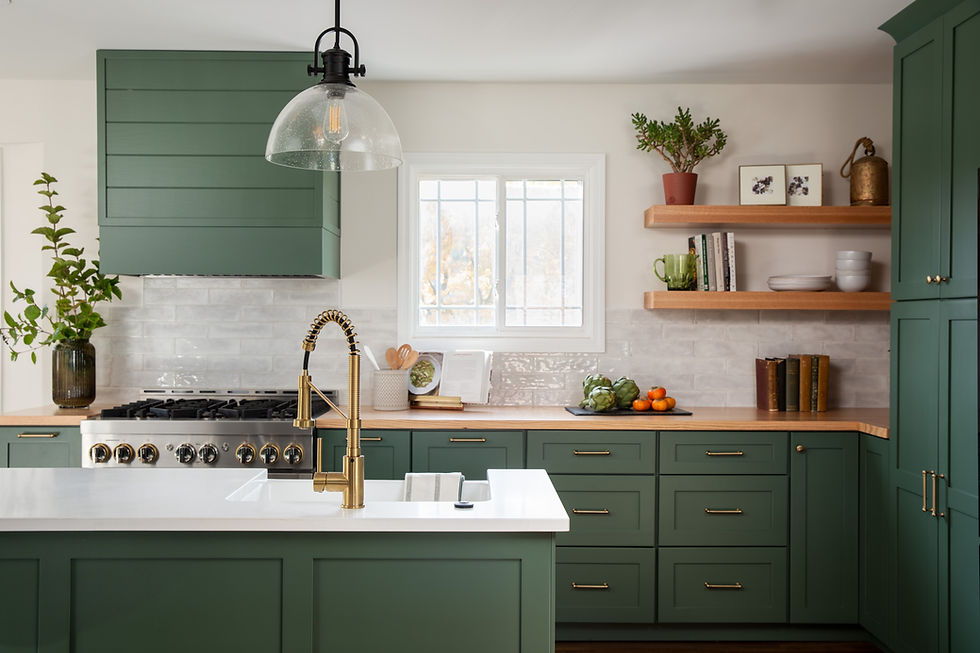
Treating lighting as an afterthought
Many people assume lighting means centering a single, pretty fixture on the ceiling and calling it a day. Relying on a single overhead light source casts harsh shadows and completely flattens the room's atmosphere, leaving it feeling cold and uninviting. The time to plan your lighting is during the framing and electrical phase, not after the drywall is up.
To create a space that feels dynamic, warm, and highly functional, it's important to incorporate layers of lighting. Using different types of fixtures in your home gives your space visual interest, but also a softened design so that there's not just harsh overhead lighting in your home.
Using fixtures like chandeliers, sconces, pendants, lamps, and accent lighting can elevate the design and truly make the house feel like home. In this kitchen, we used accent lighting throughout the kitchen and pantry for an added ambience and task lighting feature.
Not budgeting for window treatments
Especially in a new construction project, it's very common for homeowners to pour their entire budget into tile, flooring, and cabinetry, but completely forget about the windows. Suddenly, you realize you have zero privacy from the neighbors, the morning sun is blinding you in your new primary suite, and your expensive new rugs and fabrics are unprotected from UV fading.
Window treatments are not just accessories; they are structural "softeners" that bridge the gap between architecture and interior design, and serve several critical roles.
Light and UV Control: Custom solar shades or lined drapery protect your investment by preventing harmful UV rays from bleaching your expensive custom upholstery and hardwood floors.
Sound Absorption: Renovated spaces often feature a lot of hard, reflective surfaces: drywall, glass, tile, and wood. Draperies introduce a critical vertical layer of soft textile that absorbs sound, making a room instantly feel quiet, intimate, and grounded.
Scaling the Architecture: Professional design utilizes custom window treatments to correct or enhance a room's proportions. By hanging drapery headers high and wide—often just below the ceiling or crown molding—we fool the eye into believing the windows are massive and the ceilings are infinitely taller than they actually are.
In this new build design, we used roman shades, roller shades, and draperies to add softness, privacy, and light control to the home, as well as incorporating patterns and aesthetics into this true modern farmhouse design.
Not considering furniture layouts
It is incredibly common for homeowners to view a renovation purely as an architectural or structural phase. They figure, "Let’s get the walls up, the floors laid, and the lighting installed, and then we will figure out where the furniture goes."
One of the most frustrating mistakes is designing a beautiful new room, only to realize your existing furniture doesn't fit—or worse, the new layout makes it impossible to place a sofa comfortably. Homeowners frequently place outlets, floor vents, TV cable jacks, and light fixtures without knowing where the furniture will actually sit, resulting in cords running across walkways or a beautiful console blocking a vent.
As designers, we specialize in space planning and think about all these details of the home every single day. In this basement renovation, we worked with some of the client's existing furniture, like the leather sofa, while also incorporating new pieces and finishes to create a layout and design that was true to their aesthetic and functional within their new floor plan.

Choosing materials and finishes in isolation
It is easy to fall in love with a specific quartz countertop in a brightly lit showroom, a vibrant backsplash tile on Pinterest, or a moody cabinet color on a tiny paint swatch. The mistake occurs when homeowners select these finishes independently, at different times, without seeing how they interact in the actual space.
When everything is finally installed under your home's specific natural light, you may suddenly realize that the undertones clash—your "warm white" cabinets look yellow next to a cool gray countertop, or your single piece of statement tile that you look at completely overpowers the entire room when it's scaled over a larger surface.
As interior designers, our job is to look at a renovation through a macro lens from day one. We see how design elements will converse with the flooring three rooms over, how they will react to the specific natural light entering your windows, and how they will support your daily lifestyle.
For this primary bathroom renovation, we started with a wood panel accent wall, and used this material as our foundation when it came to choosing our coordinating finishes. We chose wall tile, shower tile,floor tile, cabinet color, quartz countertops, lighting, and more, all based on the geometry, undertones, and aesthetics of the wood panel material, as seen in the reflection of the vanity mirror.
At the same time, we coordinated these materials and undertones with the primary bedroom, so as you look through the door, you are seeing a cohesive design.

Forgetting to incorporate your personality
It is incredibly easy to get swept up in current internet trends or builder-grade catalogs, which often leads homeowners to design for future resale value rather than their own daily joy. The result is a home that feels like a sterile, cookie-cutter showroom—devoid of soul, character, and life. The biggest regret comes a few months after completion, when you realize the space looks perfectly fine, but it doesn't actually feel like you.
In this project, our clients had a cookie-cutter, new-build home with the basic builder-grade finishes, and didn't feel like their personalities were reflected in the design. So, we worked together to figure out their design aesthetic and select wallpaper, new light fixtures, and finishes that they loved, resulting in a warm and unique design, created just for them!
Before and After:
Before and After:
How do you avoid making these mistakes?
A home renovation or new build is one of the most significant investments you will ever make, both financially and emotionally. While the journey has its share of moving parts, it shouldn't be defined by stress, second-guessing, or costly mid-project corrections.
Your home is too important to leave to guesswork. Whether you are breaking ground on a new build or reviving a historic space, partnering with a design team from the very beginning ensures that your investment results in a collected, beautifully tailored sanctuary.
When you partner with our design studio, we handle the complex orchestration of your project from day one. We look ahead, catch the missing details, and curate cohesive finishes that sing together, all to ensure your investment results in a soulful, beautifully tailored sanctuary that feels exactly like you. Let's make sure your renovation is a story of joy, not regret.
Click here to schedule your discovery call!


